


I pray the Rosary regularly now, which is not a sentence I ever expected to write. I stumbled across it during one of my endless research spirals, probably while trying to answer some completely different theological question, and decided to give it a go. It worked for me almost immediately. My mind wanders badly in prayer; the Rosary gives it structure, keeps me focused and gives me something solid to return to when my thoughts start drifting towards emails, football, shopping lists or whatever else happens to wander through.

The Mary aspect bothered me at first. I worried that I was taking attention away from Jesus, or crossing some line I did not properly understand. Then I started paying closer attention to the mysteries themselves and realised that, across the week, I was getting a broader and more consistent meditation on the life of Christ than I ever had before. The Annunciation, the Nativity, the Baptism, the Crucifixion, the Resurrection; whatever arguments surround the Rosary, it had become for me a structured walk through the Gospel.
Then I reached the communion of saints, and things became less comfortable. I know there are endless theological debates here, involving Scripture, tradition, intercession, worship and what exactly Catholics mean when they ask a saint to pray for them. I am not getting into those debates because I do not know enough, and a few books, podcasts and late-night searches do not qualify me to pronounce on questions Christians have argued over for centuries.
What I keep wondering, though, is whether it is acceptable to take the parts that appear harmless and helpful. Can I pray the Rosary, believe that Christians remain united in Christ beyond death, and still worship happily in an Anglican church? Perhaps some of these beliefs can sit together; perhaps others genuinely contradict each other, and I am simply not far enough along to see where the fault lines are.
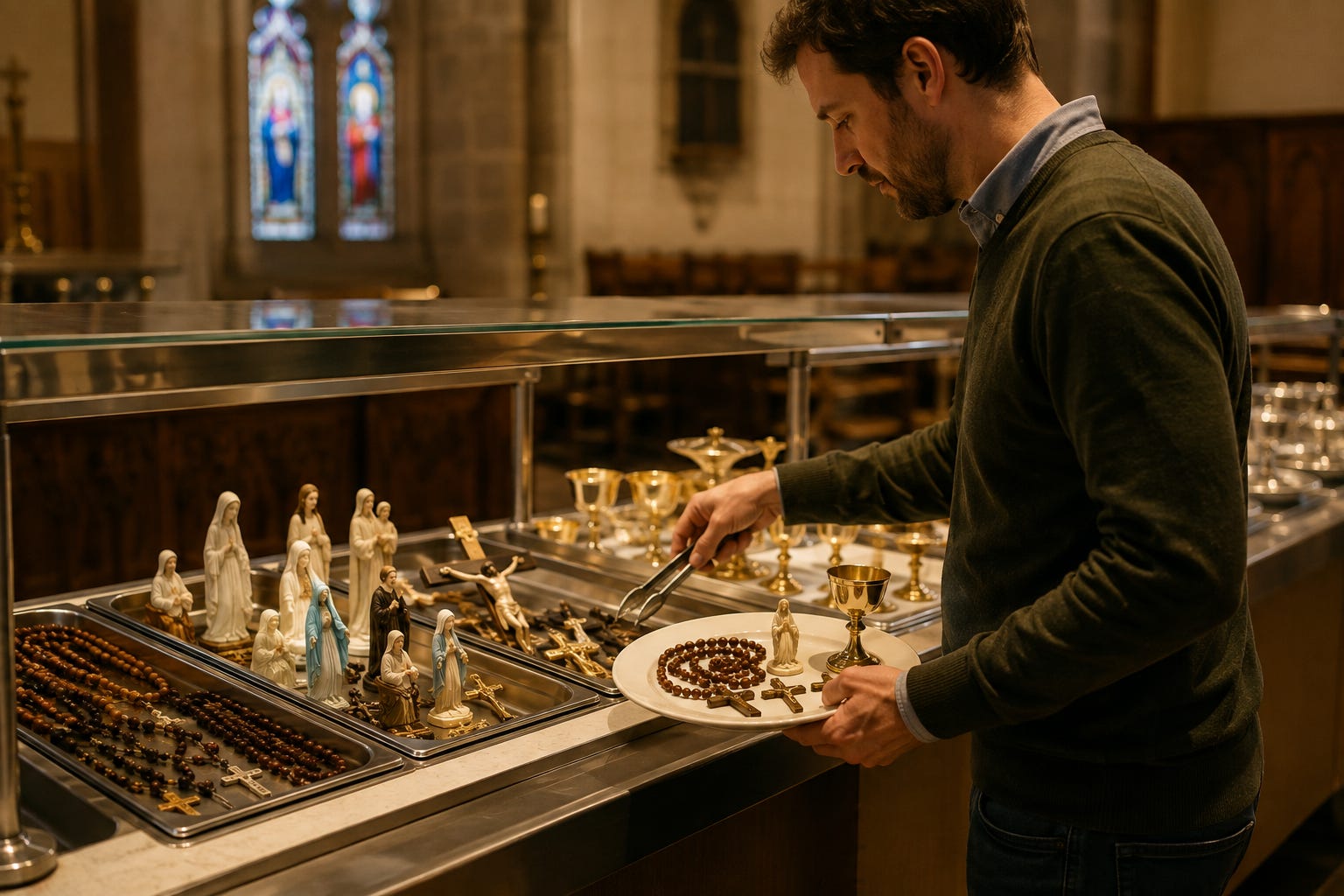
That is the danger, of course. I could end up treating denominations like a buffet, taking the practices I enjoy, leaving behind the doctrines that challenge me and calling the result discernment. C. S. Lewis described Christianity as a hallway with different rooms leading from it; the hallway is useful while deciding where you belong, but nobody is meant to live there forever. I am still in the corridor, although I am beginning to suspect that, eventually, I may have to choose a room.
Earlier in the spring I actually wrote a 4 week series on my denominational journey. Even though I left many for good reasons and ultimately landed in the United Methodist Church, my reflections were about the many beautiful things I gained from each one and how they have all shaped me and remain part of who I am today.
In our division, we too often lose the beauty of difference.
You’re right, you will eventually have to choose a room, but you can take the good things from other rooms and store them in your pockets.