
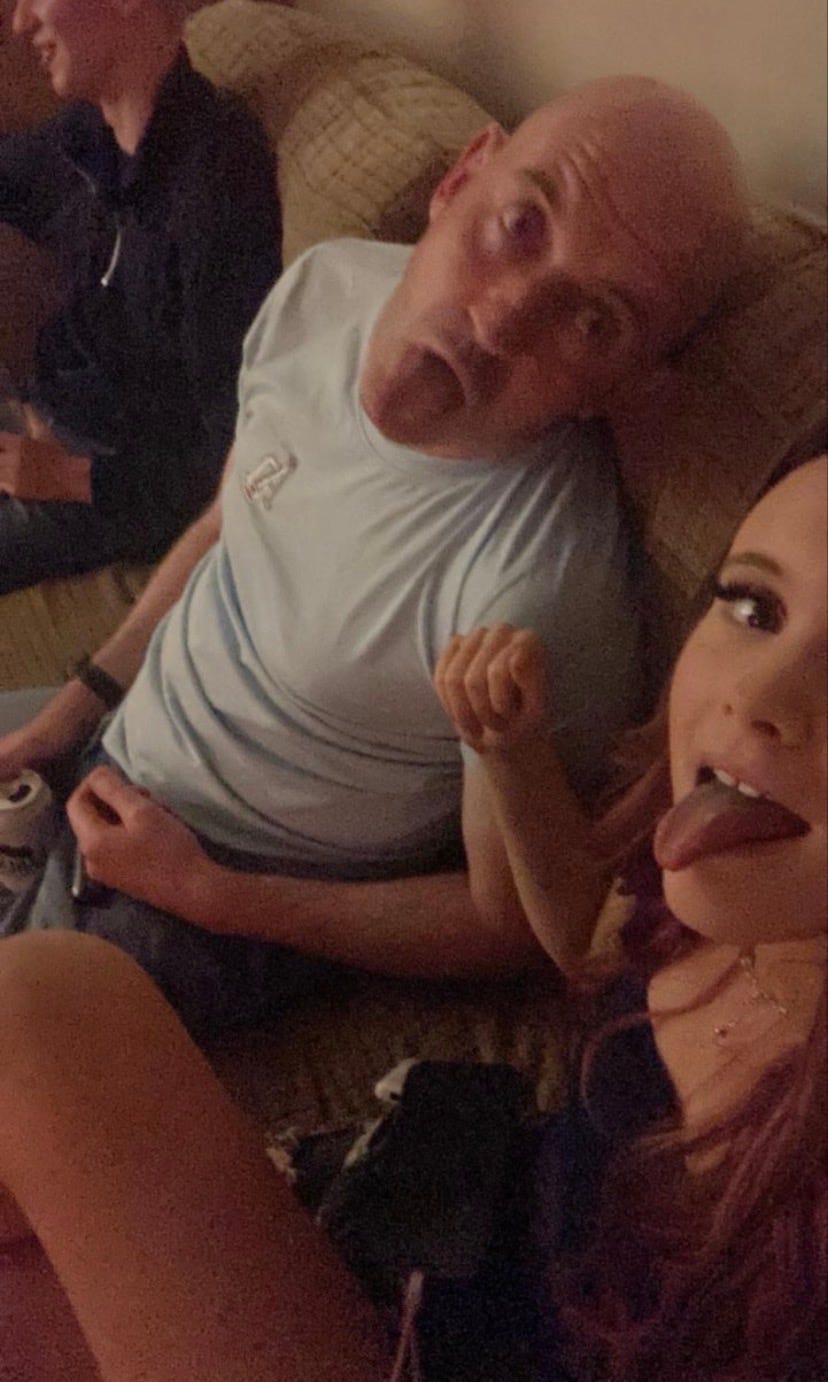
There is a photo of me from the night before my mom died.
I am sitting on my father-in-law’s sofa, drunk, ordinary, completely unaware that I am living inside the last few hours of my old life.
That is the strange thing about photographs. They know more than the person in them. They sit there quietly, holding the truth in advance. Everyone looking at the picture afterwards knows what is coming, but the idiot in the photo does not. He is just there, slightly gone, probably thinking about nothing profound whatsoever, while history is already walking up the drive.
I have looked at that photo a lot since.
Part of me wants to warn him. Part of me wants to shake him. Part of me feels sorry for him, because he has no idea that the next morning a phone call will come and split his life into before and after. He does not know that one sentence is about to rearrange his family, his memory, his marriage, his sense of God, and whatever lazy little assumptions he had been making about time.
He just looks like me.
That might be the most unsettling part.
I used to think the big moments in life would announce themselves more clearly. Death, faith, disaster, love, revelation; the serious things should at least have the manners to arrive with some atmosphere. Instead, they turn up in the middle of normal life while you are wearing whatever you happened to put on that day.
My mom died suddenly the next morning.
I keep typing that sentence and feeling as if it should do more than it does. It is factual, but it is too efficient. It gets the information across and leaves out nearly everything that matters. It leaves out the cracked voice on the phone, the way your mind becomes practical because practical is safer, the way family members suddenly sound like frightened children, and the way your own body keeps moving through the day as though it has been given instructions you were not copied into.
For a while, I did what most people do. I functioned. That is such a cold little word, but it is accurate. I answered, moved, worried, remembered, forgot, repeated myself, stared at things, said the same facts out loud until they began to sound like someone else’s story, then felt guilty for the tiny betrayal of getting used to the words.
The writing started because I did not trust memory to do the job properly.
Grief edits things if you leave it alone. It sharpens some moments until they become almost unbearable and blurs others until you begin to wonder whether you invented them. I started writing bits down because I wanted to catch the texture of what had happened before it became a family anecdote with all the awkward edges rubbed smooth.
At first, I thought I was only writing about my mom dying.
That would have been enough.
Then the story began to widen.
It widened into my dad, who suddenly seemed breakable in a way he never had before. It widened into my own family, because grief does not politely stay in the room you put it in. It widened into the strange things people say when death makes them nervous. It widened into humour, because apparently even devastation is not enough to stop a family being ridiculous. It widened into questions I had never taken seriously enough because life had never forced me to.
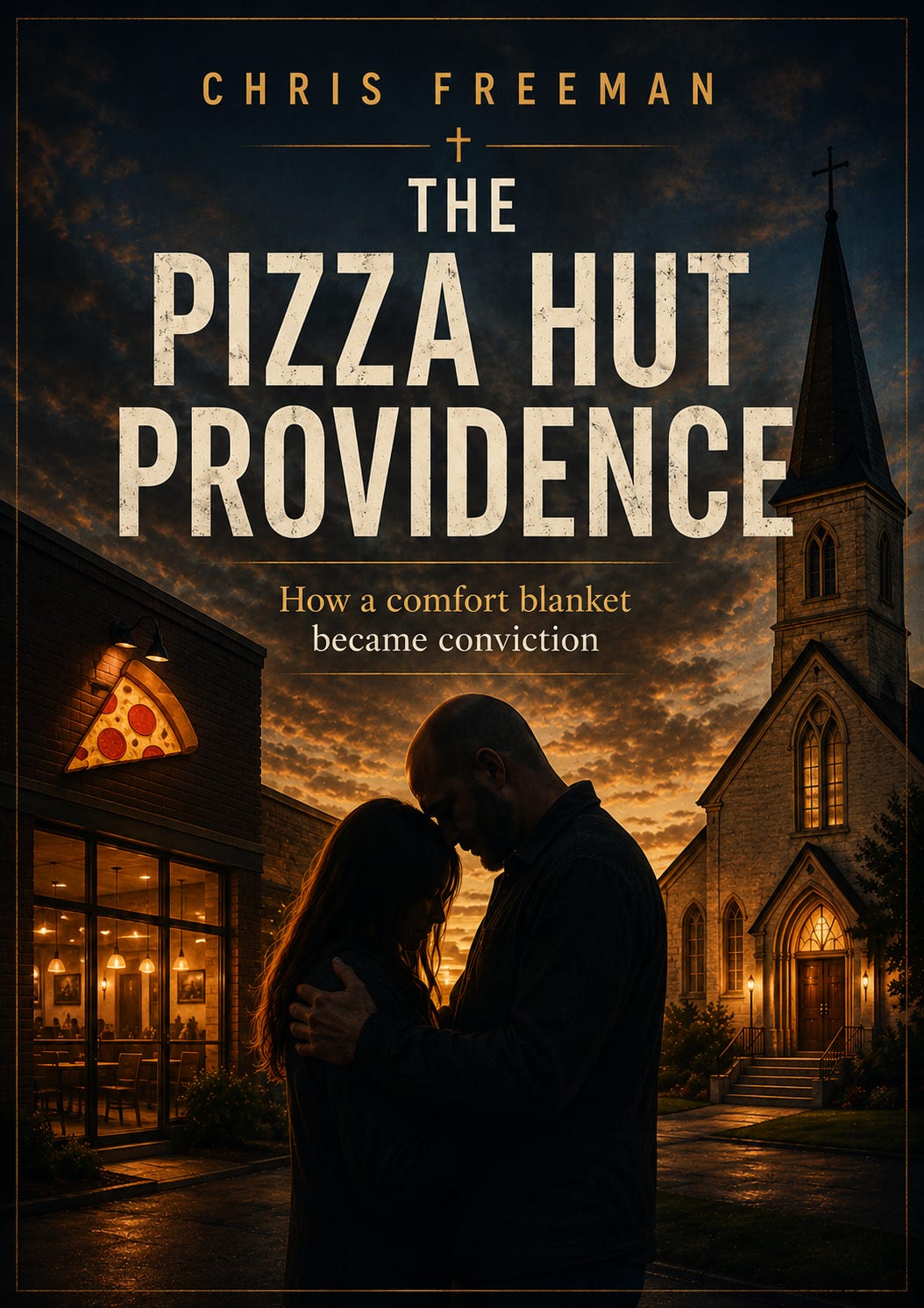
Then there was Pizza Hut.
I know.
Believe me, I know.
Nobody wants the sentence “Then there was Pizza Hut” in the story of their spiritual life. It is hard to make that sound serious without looking like you have lost control of the tone. Still, that is how it happened. An ordinary place became attached to an ordinary moment, and that moment opened something I could not easily close again.
I am not going to explain it properly here. It would sound too small without the life around it, and too neat if I tried to turn it into a lesson. In the book, it has room to breathe. Here, all I need to say is that it became the crack where something started to grow.
That is the book I have written.
It is not a book about becoming impressive through grief. It is not a book about finding a tidy answer and walking serenely towards the light like a man in a Christian stock image. It is about a very ordinary life being interrupted by death, and then by something else. Something quieter, stranger, funnier and harder to explain without sounding slightly unhinged.
The manuscript is with beta readers now, which means other people are walking around inside a story that lived privately in me for months. That feels exciting and horrible in almost equal measure. There are real people in it. Real grief. Real mistakes. Real moments where I do not come out looking especially wise. That matters to me, because I do not want to turn pain into branding or faith into a polished little performance.
So this Substack starts here, with the photo.
The night before.
The sofa.
The drunk bloke who does not know what is coming.
Over the next few weeks, while the book is being read, I am going to write about the world around it: grief as it actually behaves, the oddness of trying to tell the truth about your own family, the way humour survives in awful places, and the strange business of feeling something open in your life before you have the language to explain it.
I am starting with that photo because it still bothers me.
It bothers me that I was so close to the edge of everything and had no idea.
It bothers me that life can change without giving you the courtesy of a warning.
It bothers me that the man in the picture looks exactly like me and also like someone I can never quite get back to.
And maybe that is why I wrote the book.
To stand beside him for a bit.
To tell him what happened next.
To find out whether the story that began with a phone call might have been held by something larger than the phone call itself.